DHL
The digital post office branch accessible to everyone without barriers
Customers should continue to have access to postal products and services at many locations in the future. The digital branch closes this gap.
Sector
Logistik and Supply Chain
Principle
Period
08.2024 - 07.2025
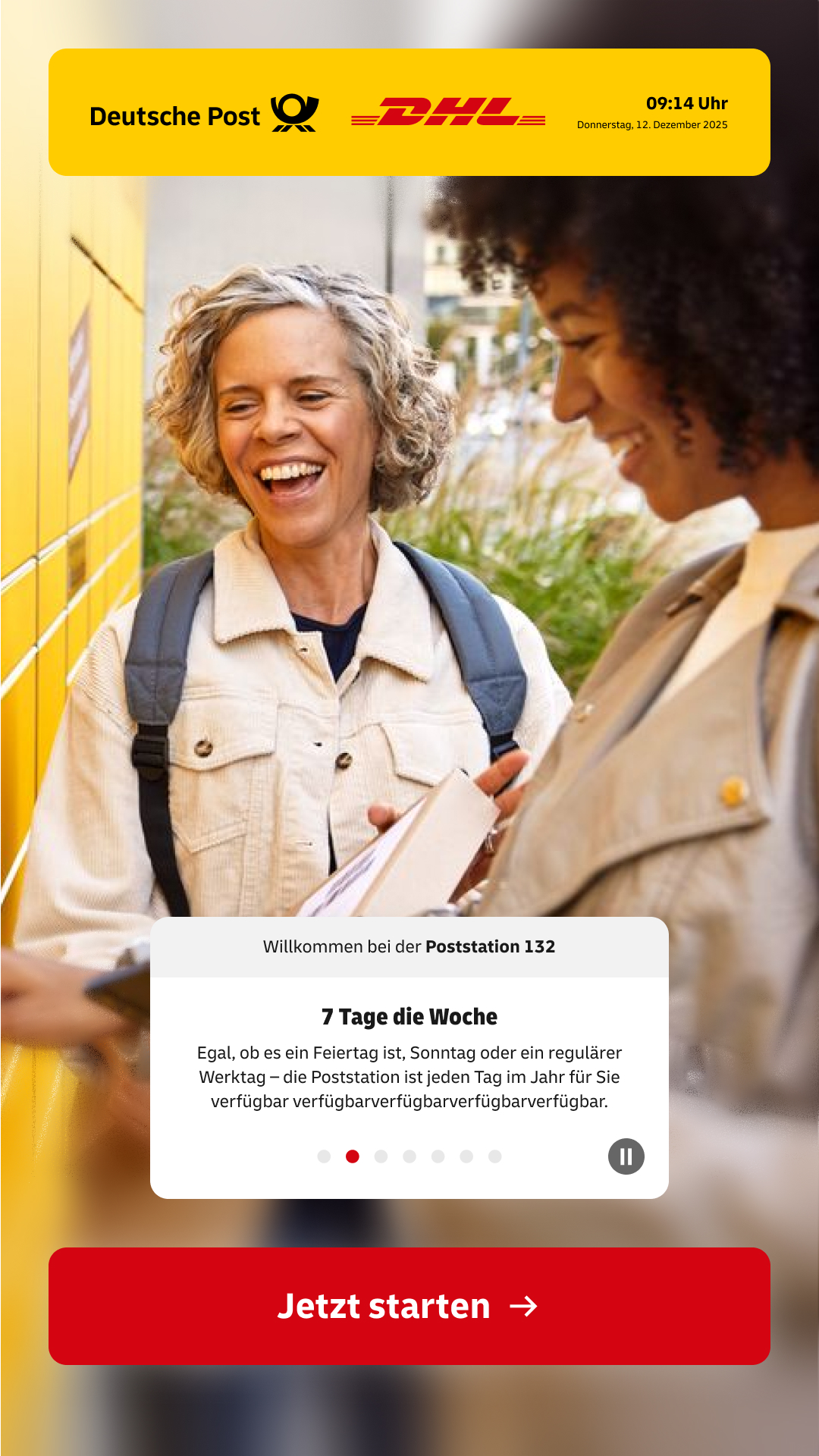
With the introduction of new parcel stations, DHL is evolving its branch concept. Traditional locations are gradually being complemented by digital self-service systems. The accessible DHL parcel station in public spaces is thus becoming a central access point.
Our task was to translate the familiar service quality of a physical branch into a clearly structured and accessible digital interaction.
Challenge
In a branch, staff guide customers through complex processes. At the parcel station, the system takes on this role. Shipping options must be selected, additional services understood and payments processed.
At the same time, EN 301 549 requires a consistently accessible design. The main challenge was therefore to make the DHL parcel station intuitive to use for everyone. Regardless of age, experience with digital systems or disabilities.
The challenge was to structure complex branch processes in a way that they remain independently understandable and safe to use in public spaces.
With the introduction of new parcel stations, DHL is evolving its branch concept. Traditional locations are gradually being complemented by digital self-service systems. The accessible DHL parcel station in public spaces is thus becoming a central access point.
Our task was to translate the familiar service quality of a physical branch into a clearly structured and accessible digital interaction.
Challenge
In a branch, staff guide customers through complex processes. At the parcel station, the system takes on this role. Shipping options must be selected, additional services understood and payments processed.
At the same time, EN 301 549 requires a consistently accessible design. The main challenge was therefore to make the DHL parcel station intuitive to use for everyone. Regardless of age, experience with digital systems or disabilities.
The challenge was to structure complex branch processes in a way that they remain independently understandable and safe to use in public spaces.
With the introduction of new parcel stations, DHL is evolving its branch concept. Traditional locations are gradually being complemented by digital self-service systems. The accessible DHL parcel station in public spaces is thus becoming a central access point.
Our task was to translate the familiar service quality of a physical branch into a clearly structured and accessible digital interaction.
Challenge
In a branch, staff guide customers through complex processes. At the parcel station, the system takes on this role. Shipping options must be selected, additional services understood and payments processed.
At the same time, EN 301 549 requires a consistently accessible design. The main challenge was therefore to make the DHL parcel station intuitive to use for everyone. Regardless of age, experience with digital systems or disabilities.
The challenge was to structure complex branch processes in a way that they remain independently understandable and safe to use in public spaces.
Initial situation
The existing parcel lockers had been established for many years. With their evolution into postal stations, the functional scope increased significantly. The goal was to represent all branch services digitally in a way that is as clear and accessible as possible.
With the introduction of large-format touchscreens and the continued use of existing devices, different technical conditions emerged for the system. The accessible DHL postal station needed to function consistently across multiple device categories.
At the same time, all processes had to be structured logically and translated into a consistent information architecture. Only in this way could digital user guidance match the clarity of personal assistance.
Initial situation
The existing parcel lockers had been established for many years. With their evolution into postal stations, the functional scope increased significantly. The goal was to represent all branch services digitally in a way that is as clear and accessible as possible.
With the introduction of large-format touchscreens and the continued use of existing devices, different technical conditions emerged for the system. The accessible DHL postal station needed to function consistently across multiple device categories.
At the same time, all processes had to be structured logically and translated into a consistent information architecture. Only in this way could digital user guidance match the clarity of personal assistance.
Initial situation
The existing parcel lockers had been established for many years. With their evolution into postal stations, the functional scope increased significantly. The goal was to represent all branch services digitally in a way that is as clear and accessible as possible.
With the introduction of large-format touchscreens and the continued use of existing devices, different technical conditions emerged for the system. The accessible DHL postal station needed to function consistently across multiple device categories.
At the same time, all processes had to be structured logically and translated into a consistent information architecture. Only in this way could digital user guidance match the clarity of personal assistance.
Process
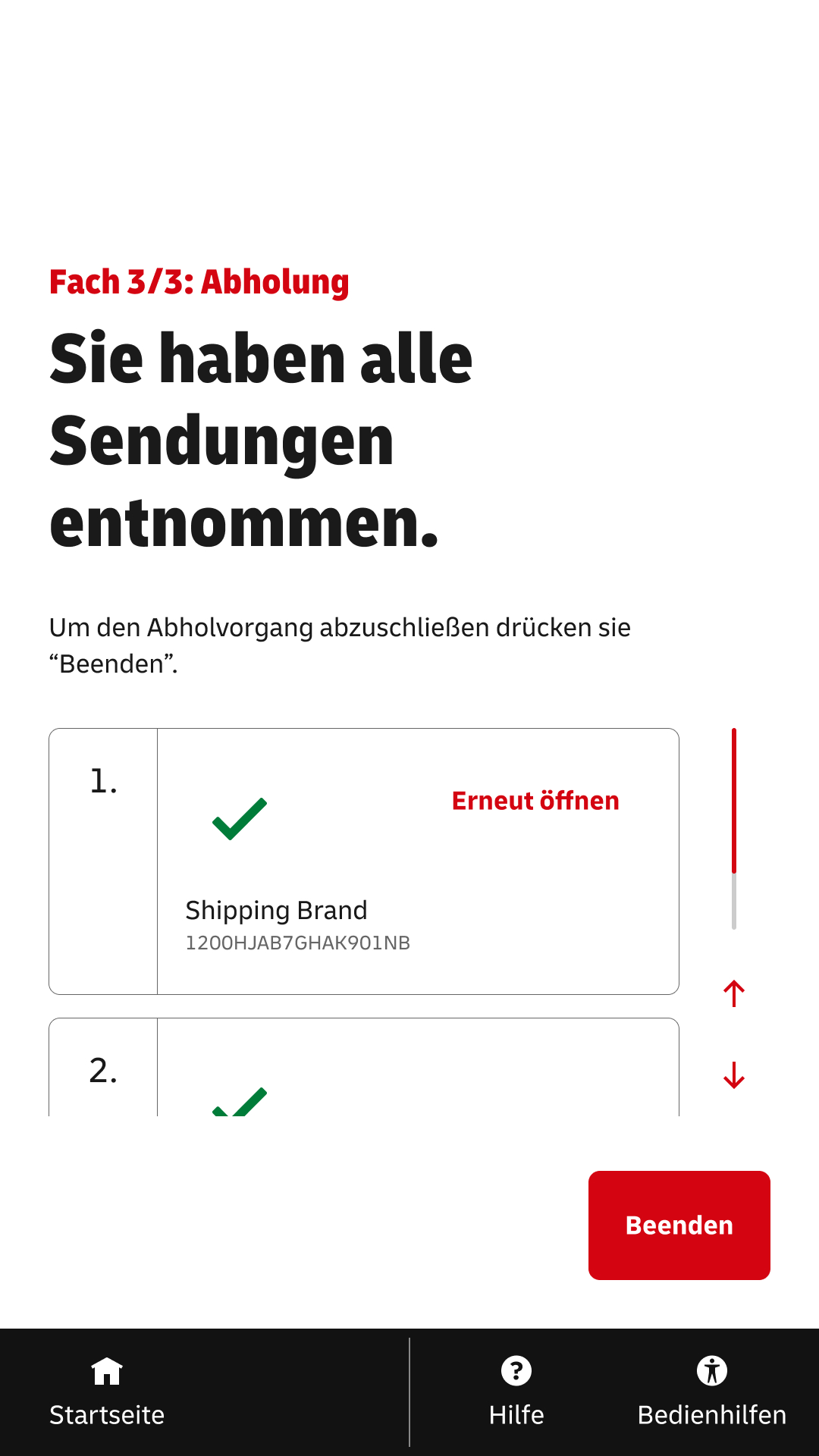
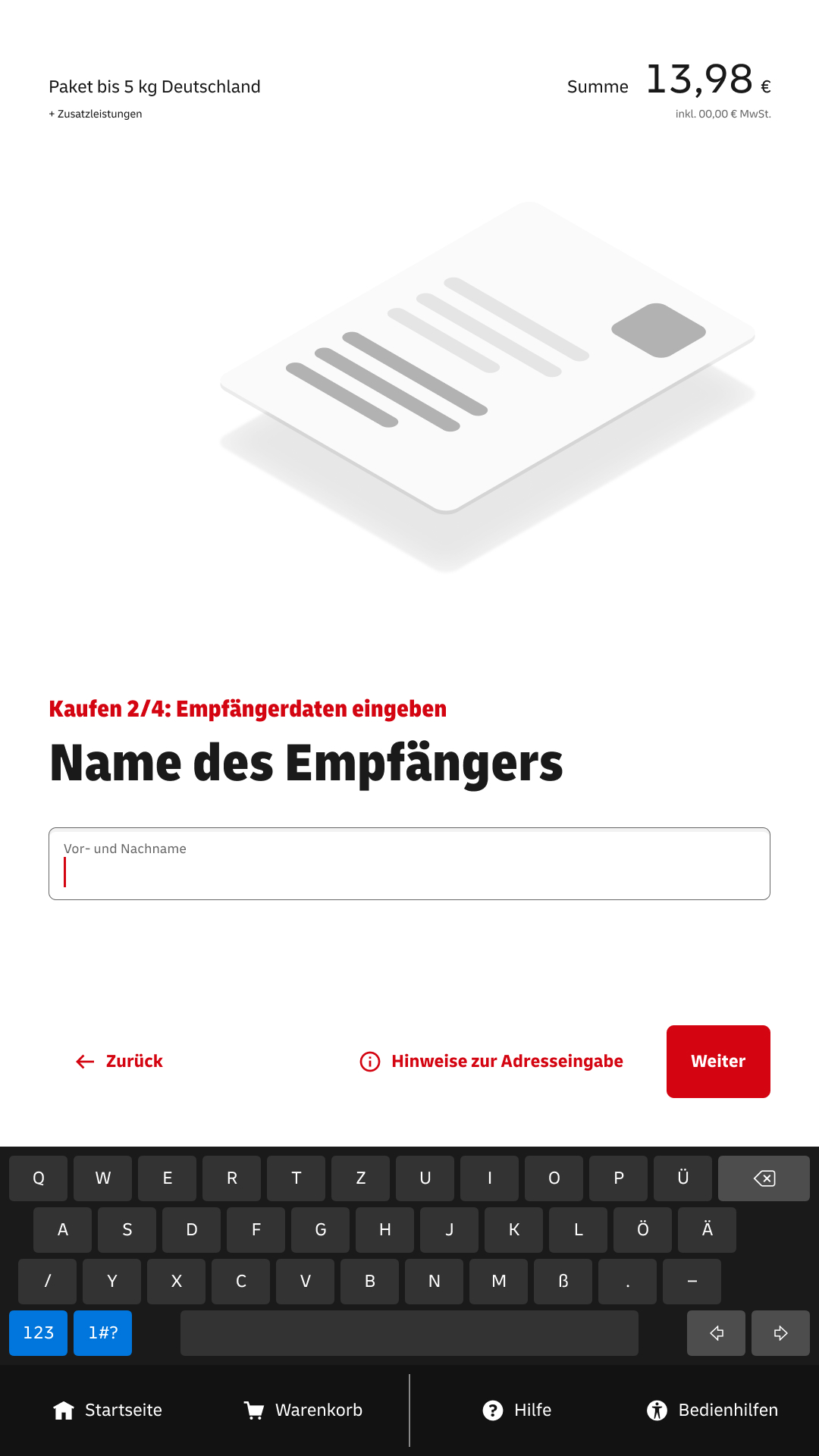
UseTree analysed the existing processes and restructured them. Services such as collection and shipping, or postage purchase and additional services, were clearly sequenced. Decision paths were deliberately simplified. Process steps were logically aligned.
In parallel, UseTree developed a scalable design system for digital self-service systems in public spaces, covering both new large-format displays and existing devices. Interaction patterns were standardised and systematically reviewed for accessibility. Accessibility was embedded as an integral part of navigation, information hierarchy and system feedback.
To validate the concept, the accessible DHL postal station was tested with different user groups. The tests showed where orientation works intuitively and where additional support is required. The insights gained were directly fed into further development.
Implementation followed an iterative approach in close coordination with development, quality assurance and business stakeholders. This resulted step by step in a robust and consistent solution.
Process
UseTree analysed the existing processes and restructured them. Services such as collection and shipping, or postage purchase and additional services, were clearly sequenced. Decision paths were deliberately simplified. Process steps were logically aligned.
In parallel, UseTree developed a scalable design system for digital self-service systems in public spaces, covering both new large-format displays and existing devices. Interaction patterns were standardised and systematically reviewed for accessibility. Accessibility was embedded as an integral part of navigation, information hierarchy and system feedback.
To validate the concept, the accessible DHL postal station was tested with different user groups. The tests showed where orientation works intuitively and where additional support is required. The insights gained were directly fed into further development.
Implementation followed an iterative approach in close coordination with development, quality assurance and business stakeholders. This resulted step by step in a robust and consistent solution.
Process
UseTree analysed the existing processes and restructured them. Services such as collection and shipping, or postage purchase and additional services, were clearly sequenced. Decision paths were deliberately simplified. Process steps were logically aligned.
In parallel, UseTree developed a scalable design system for digital self-service systems in public spaces, covering both new large-format displays and existing devices. Interaction patterns were standardised and systematically reviewed for accessibility. Accessibility was embedded as an integral part of navigation, information hierarchy and system feedback.
To validate the concept, the accessible DHL postal station was tested with different user groups. The tests showed where orientation works intuitively and where additional support is required. The insights gained were directly fed into further development.
Implementation followed an iterative approach in close coordination with development, quality assurance and business stakeholders. This resulted step by step in a robust and consistent solution.
Impact
Services can be used independently and products purchased directly via the station. Clearly structured processes make operation easier for users and reduce cognitive load. Supporting guidance is available at all times, and the requirements of EN 301 549 are systematically addressed.
For DHL, this represents a sustainable evolution of the service offering. The postal station becomes a stable digital touchpoint for branch processes and significantly extends accessibility in public spaces.
At the same time, this creates a scalable foundation for additional locations and future digital services.
Impact
Services can be used independently and products purchased directly via the station. Clearly structured processes make operation easier for users and reduce cognitive load. Supporting guidance is available at all times, and the requirements of EN 301 549 are systematically addressed.
For DHL, this represents a sustainable evolution of the service offering. The postal station becomes a stable digital touchpoint for branch processes and significantly extends accessibility in public spaces.
At the same time, this creates a scalable foundation for additional locations and future digital services.
Impact
Services can be used independently and products purchased directly via the station. Clearly structured processes make operation easier for users and reduce cognitive load. Supporting guidance is available at all times, and the requirements of EN 301 549 are systematically addressed.
For DHL, this represents a sustainable evolution of the service offering. The postal station becomes a stable digital touchpoint for branch processes and significantly extends accessibility in public spaces.
At the same time, this creates a scalable foundation for additional locations and future digital services.






The project was demanding and required a great deal from everyone involved. All the more, I value the consistently professional and solution-oriented collaboration with UseTree. Particularly in the field of accessibility, the team made a decisive contribution. From screen reader optimisation to clear and understandable UX copy, they did not just execute but actively contributed, questioned and refined. The result is a solution with lasting impact and a solid foundation for future developments.
Arash Zamani – DHL IT Services
Lorem ipsum dolor sit amet, consectetur adipiscing elit. Suspend Varius Enim in Eros Elementum Tristique. Duis cursus, mi quis viverra ornare, eros dolor interdum nulla, ut commodo diam libero vitae erat.
Lorem Ipsum Dolor Sit Amet